By T. Lancaster
A new stem cell embryo model from Harvard can reliably grow the early building blocks of the human trunk, the part of the body that later forms the spinal cord, spine, back muscles, kidneys, heart and limbs. The study, published in Nature on November 25, 2026, shows that two well-known chemical signals, WNT and BMP, delivered briefly and in the right spots, are enough to start this process in a dish.
This is lab research, not a treatment. Its value for patients is indirect: a dependable human model could help scientists study how birth defects such as spina bifida and some heart and limb malformations begin.
How the Stem Cell Embryo Model Works
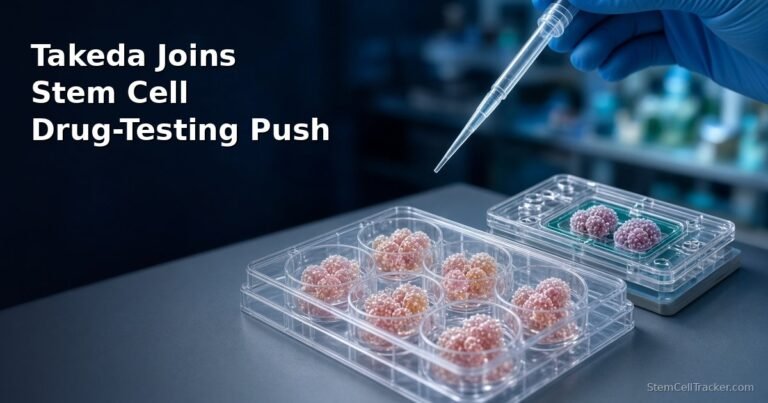
The team, led by Sharad Ramanathan with co-first authors Tianlei He and Steven Zwick, started with human pluripotent stem cells, which can become almost any cell type. The cells were grown into small hollow balls called epithelial cysts, each sitting in a tiny well on a silicone chip.
Researchers then dropped a bead coated with the signaling protein BMP4 into precise spots in each well and added a WNT-activating drug. According to the Harvard announcement, hundreds of cysts could be patterned at once.
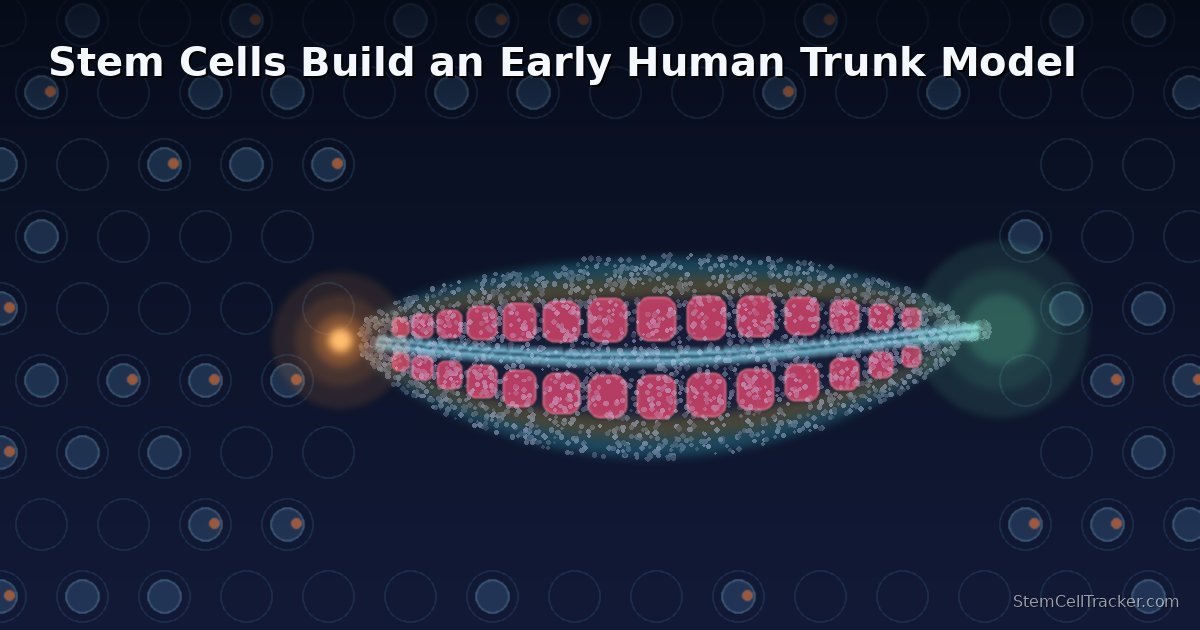
Over about five days, the cysts stretched out into what the authors call “trunk morphs.” These contained a central neural tube (the forerunner of the spinal cord) flanked by the main mesoderm layers that later form the spine and ribs, kidneys and gonads, and the heart, blood vessels and limbs.
Why the Signal Placement Matters
The key finding is that the short initial signals set up two self-sustaining “signaling centers” inside the tissue. One drove growth along the head-to-tail axis. The other organized tissue from the midline outward and controlled whether the left and right sides came out symmetric. Where the BMP bead sat had lasting effects on that pattern.
Ramanathan described the work as early-stage in the Harvard release: “We are still very far from generating organs in vitro, but this is a first step.”
Stem Cell Tracker Analysis
We read the full Nature paper and its supplementary figure notes. Several details did not appear in the press coverage we found:
- Sample sizes are modest and per-structure. Growth was tracked in 93 individual trunk morphs from day 0 to day 5 (120 hours), and key patterning images are reported as representative of 10 independent experiments covering 55 morphs. Some comparison groups were small, such as 10 untreated versus 8 drug-treated morphs in a test of whether ongoing WNT secretion was needed for elongation.
- The gut layer was blocked on purpose. The protocol includes A83-01, a TGF-beta pathway inhibitor, and the authors show it suppresses the endoderm marker SOX17. Harvard says this was done so the structures could not develop as embryos. They lack several tissues needed for normal development.
- Comparison to real embryos is by gene activity. The team compared single-cell RNA profiles from the trunk morphs with published data from week 3 and week 4 human embryos (Zeng et al., Cell Stem Cell, 2023). That supports similarity in cell types, not full anatomical equivalence.
- Funding and conflicts. The work was funded by two NIH grants (R01MH136014 and R01GM131105) and Harvard startup funds. Four authors, including Ramanathan, are inventors on a pending Harvard U.S. patent application (no. 19/483,312) covering the bead-based signal delivery method. A bioethicist, Josephine Johnston of the University of Otago, is a co-author.
- Data are open. Sequencing data are deposited in GEO (GSE306808 and GSE347564), and analysis code is public on GitHub, which lets other labs check the findings.
This study builds on earlier trunk models. A 2023 Nature Biotechnology paper described self-organizing human trunk models that formed spinal cord and spine tissue together, and a 2025 Nature Cell Biology study grew trunk-like structures with somites and a neural tube that matched roughly days 28 to 35 after fertilization. What the Harvard team adds is control over the lateral layers, including the intermediate and lateral plate mesoderm, which give rise to the kidneys, heart and limbs, plus a format that can be run at scale.
Limits remain. The structures were studied for only about a week, results come from one lab, and no organs formed. The authors note the work followed ISSCR guidelines for embryo models, which were revisited in 2025 as these models grow more complex. Our earlier story on stem cell models for drug testing covers related industry efforts.
What This Means for Patients
There is no treatment here, and none is expected soon. Families affected by spina bifida, congenital heart defects, limb differences or certain kidney malformations are the groups most likely to benefit over the long term, because this kind of model may help researchers learn how those conditions start and test ideas for prevention.
Ramanathan has said that growing organs in the lab remains far off. Any medical use would require many more years of research, independent replication and, eventually, clinical trials. Nothing based on this work is available to patients today.
Be cautious of any clinic that cites research like this to sell stem cell injections or “regenerative” procedures. Lab models of early development are not therapies. Our guide to stem cell clinic red flags explains what to watch for. If you have questions about a congenital condition, talk with your doctor or a genetic counselor. New to the topic? Start with What Are Stem Cells? A Simple Guide.
Sources
- He T., Zwick S., et al. “Engineering signalling centres to trigger human trunk morphogenesis in vitro.” Nature, Nov. 25, 2026: https://www.nature.com/articles/s41586-026-11326-5
- Harvard FAS: “Harvard scientists unlock formation of the human trunk,” Nov. 25, 2026: https://current.fas.harvard.edu/stories/harvard-scientists-unlock-formation-human-trunk
- Earlier trunk model, Nature Biotechnology (2023): https://www.nature.com/articles/s41587-023-01956-9
- Trunk-like structures with somites and neural tube, Nature Cell Biology (2025): https://www.nature.com/articles/s41556-025-01813-8
- Study code repository: https://github.com/stevenzwick/zwick-2026-trunk-morphogenesis
Reviewed by T. Lancaster, Editor. Stem Cell Tracker uses AI tools to help research and draft stories; see our Editorial Policy. This article is for education only and is not medical advice.