
An experimental sickle cell gene therapy that fixes the disease-causing mutation itself, rather than working around it, has freed all three of its newest patients from blood transfusions, according to early trial data Kamau Therapeutics announced on November 4, 2026. None of the patients has had a pain crisis since treatment, and the two followed longest now make mostly normal adult hemoglobin.
The therapy, called nula-cel, edits a patient’s own blood stem cells in the lab and returns them after chemotherapy. Think of it as correcting a single typo in a recipe so the kitchen starts cooking the right dish again, instead of adding a second recipe to cover for the mistake. The results are early and come from a handful of people, but they are the first multi-patient evidence that this kind of precise repair can work in humans.
What the Sickle Cell Gene Therapy Trial Showed
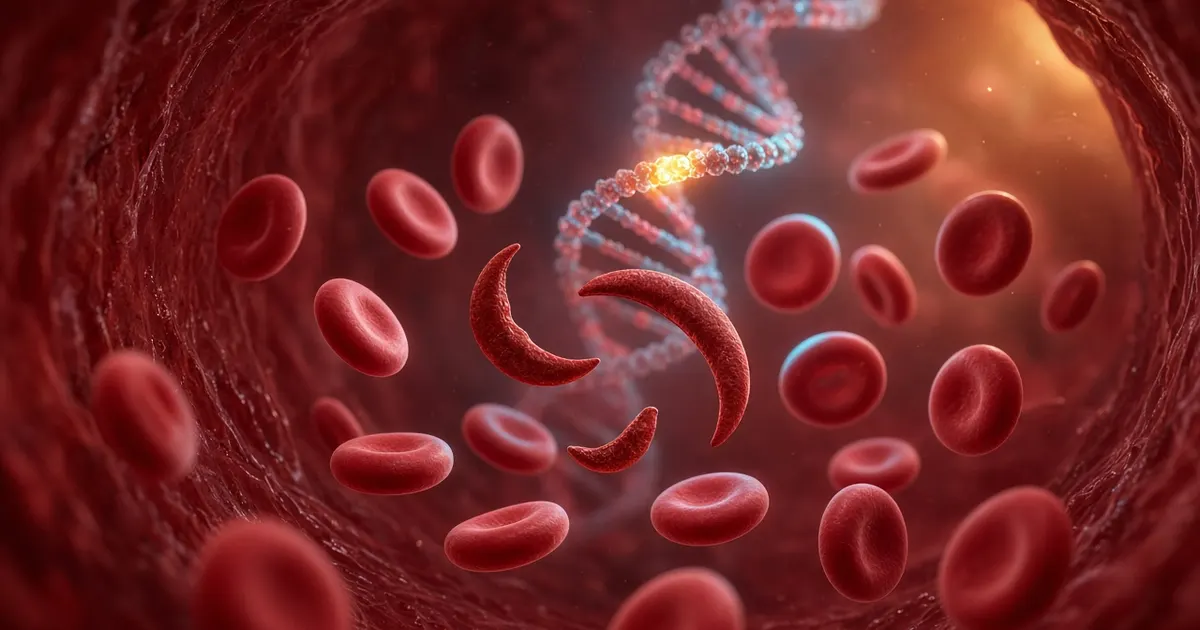
Sickle cell disease comes from one changed letter in the β-globin (HBB) gene. That change produces sickle hemoglobin (HbS), which makes red blood cells stiff and crescent-shaped, leading to pain crises, organ damage and a shorter life. Nula-cel uses a gene-editing method called homology-directed repair to swap the faulty letter back to the normal sequence, so corrected stem cells make healthy adult hemoglobin (HbA).
According to the company’s summary of an abstract accepted for an oral presentation at the American Society of Hematology (ASH) meeting on December 14, 2026:
- All three patients treated with an updated manufacturing process (version 2.0) stopped needing transfusions before leaving the hospital.
- No patient has had a vaso-occlusive event (pain crisis) since infusion.
- In the two patients with more than six months of follow-up, total hemoglobin reached 10.2 and 11.1 g/dL, sickle hemoglobin fell to 17.6% and 19.1%, and adult hemoglobin made up 76.8% and 66.8%.
- No serious side effects were linked to nula-cel or the editing itself; the side effects seen matched those expected from busulfan chemotherapy and a stem cell transplant.
The company also said the first person ever treated with an earlier version of nula-cel is now four years past infusion.
Stem Cell Tracker Analysis
We checked the announcement against the trial’s public registry entry and earlier research. Here is what stands out.
The trial is small and built mainly to test safety. The RESTORE study is listed on ClinicalTrials.gov as NCT04819841, a Phase 1/2 trial that began in November 2021, plans to enroll 15 people and is still recruiting. Its listed primary outcomes are about safety: whether patients’ blood counts recover (neutrophil engraftment), treatment-related deaths, overall survival, and side effects. The hemoglobin results in the headlines are encouraging, but the study was not designed to prove the therapy works. The registry lists six U.S. sites, including Washington University, Memorial Sloan Kettering, Columbia, Lucile Packard Children’s Hospital, Children’s Hospital Los Angeles and Nationwide Children’s Hospital, with primary completion listed for December 31, 2026.
The data come from a press release, not a peer-reviewed paper. The numbers are drawn from a conference abstract that has not yet been presented, and only two of the three new patients have more than six months of follow-up. The full picture should come at ASH in December.
Only about a fifth of gene copies are corrected, and that may be enough. The company reported that about 20% of the gene copies in patients’ bone marrow carried the correction once things stabilized, even though the infused cell products started at 32% to 38%. Yet it said more than 90% of circulating red blood cells carried protective levels of anti-sickling hemoglobin. That fits a long-standing idea in the field that healthy red cells outlast sickled ones in the bloodstream, but whether these levels hold for years is still unknown.
How it differs from approved treatments. In December 2023 the FDA approved Casgevy and Lyfgenia, the first gene therapies for sickle cell disease. Casgevy uses CRISPR to switch fetal hemoglobin back on, and Lyfgenia adds a modified hemoglobin gene. Nula-cel instead aims to rewrite the original mutation, an approach first laid out by Stanford researchers including Kamau co-founder Matthew Porteus in a 2021 Science Translational Medicine study. Separately, a UCLA-led team reported the same day on manufacturing and mouse safety data for its own mutation-correcting CRISPR therapy, now in a Phase 1 trial at UCSF Benioff Children’s Hospital Oakland. Direct correction is clearly becoming a field of its own.
The hard part has not changed. Like the approved therapies, nula-cel requires myeloablative busulfan chemotherapy to clear room in the bone marrow, a demanding step with serious risks. Kamau is backed by venture investors including Khosla Ventures and Regeneron Ventures, and the abstract will be presented by a physician at Washington University, one of the trial sites.
What This Means for Patients
If you or someone you love has sickle cell disease, this is a hopeful early sign, not a treatment you can get today outside the trial. Nula-cel is still experimental, has been tested in only a few adults with severe disease, and will likely need years of larger studies before it could be considered for approval. It has FDA Fast Track and Orphan Drug designations, which can speed review but do not mean it is approved.
Approved gene therapies and long-used options such as hydroxyurea and, for some patients, donor bone marrow transplants are available now, and each has different benefits and risks. Ask your hematologist which fits your situation and whether a clinical trial makes sense; ClinicalTrials.gov lists the study’s sites and contacts. Be wary of any clinic selling “stem cell cures” for sickle cell disease outside a regulated trial, and review our guide to stem cell clinic red flags first. This article is not personal medical advice.
Related Reading on Stem Cell Tracker
- Stem Cell Transplant Infections Drop in Small Trial of Gut-Bacteria Pill SER-155
- Blood Stem Cells Have a Hidden ‘Deep Sleep’ Reserve, Mouse Study Finds
- What Are Stem Cells? A Simple Guide
Sources
- Original announcement: Kamau Therapeutics press release via GlobeNewswire, November 4, 2026
- Trial registry: ClinicalTrials.gov NCT04819841 (RESTORE)
- Prior research: Lattanzi et al., Science Translational Medicine, 2021
- Regulatory context: FDA approval of Casgevy and Lyfgenia, December 2023
- Related research: UCLA Health via Newswise, November 4, 2026
Reviewed by Ty Lancaster, Editor. Stem Cell Tracker uses AI tools to help research and draft stories; see our Editorial Policy. This article is for education only and is not medical advice.