

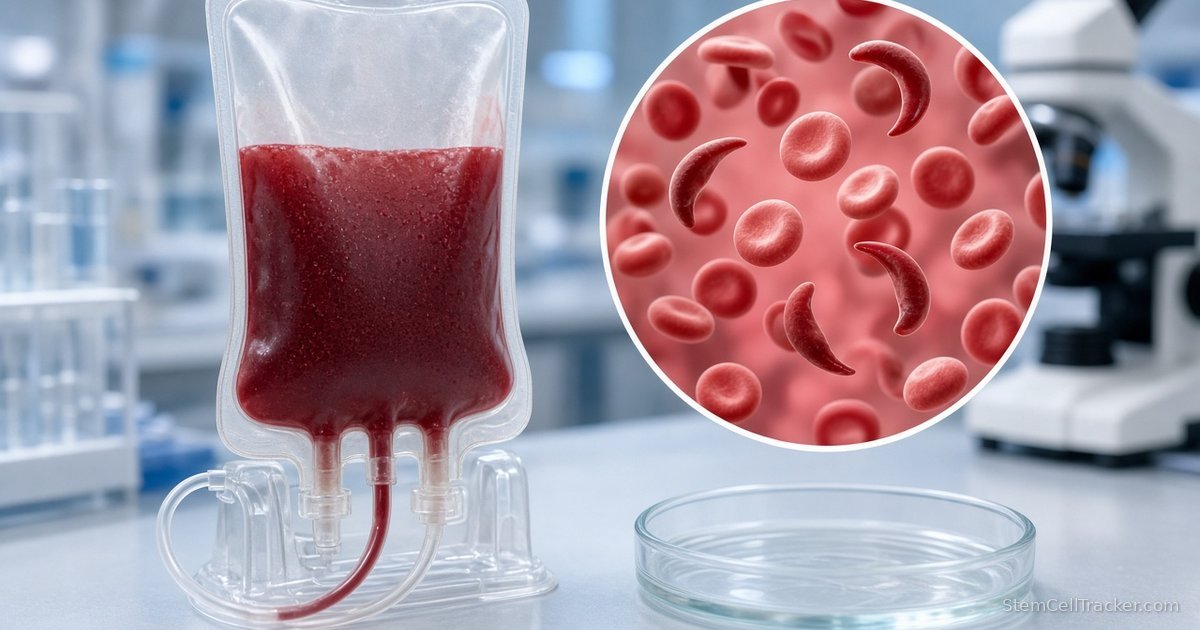
A sickle cell gene therapy that corrects the disease-causing mutation directly has received a new FDA designation meant to speed its development. Kamau Therapeutics announced on November 12, 2026 that the U.S. Food and Drug Administration granted Regenerative Medicine Advanced Therapy (RMAT) designation to nula-cel, its experimental treatment made from a patient’s own edited blood stem cells.
The designation does not approve the therapy, and it is not available to patients outside a clinical trial. What it changes is the pace of the conversation with regulators: the company now gets more frequent FDA meetings and may qualify for faster review later. The evidence behind it still comes from a small number of patients.
What the FDA RMAT Designation Means for Nula-cel
RMAT designation was created by Section 3033 of the 21st Century Cures Act. According to the FDA, a therapy qualifies if it is a regenerative medicine product meant to treat a serious or life-threatening condition, and preliminary clinical evidence shows it has the potential to address an unmet medical need. Kamau said designated therapies receive early and frequent FDA engagement and may be eligible for priority review and accelerated approval.
Nula-cel already held Fast Track and Orphan Drug designations. Kamau’s chief medical officer, Jacob Garcia, MD, said in the release that the company plans to request a multidisciplinary RMAT meeting with the agency “to align on the path to a registrational dataset,” including possible priority review and endpoints for accelerated approval.
The Sickle Cell Gene Therapy Trial Behind the Decision
Sickle cell disease is caused by a single change in the β-globin gene that produces sickle hemoglobin (HbS). Nula-cel is designed to switch that change back to the normal adult sequence in a patient’s blood stem cells outside the body, using a repair method called homology-directed repair. The corrected cells are then returned to the patient after chemotherapy.
Kamau said the designation rests on early results from its Phase 1/2 RESTORE trial. All three patients treated with the company’s optimized manufacturing process became transfusion independent and have had no vaso-occlusive events (pain crises). The two patients followed for more than six months have sickle hemoglobin below 20%, under the 30% level that, according to the company, guidelines target for stroke prevention in transfusion programs. We covered those results in detail when they were first released: see our November 4 report on the nula-cel trial data.
Stem Cell Tracker Analysis
We checked the announcement against the trial registry and the FDA’s own rules for the designation. Here is what we found.
The bar for RMAT is “preliminary” evidence, and that is what this is. The FDA’s criteria require only preliminary clinical evidence of potential benefit. The headline numbers come from three patients, with only two followed past six months. The designation is a signal that the agency sees promise, not a finding that the therapy works or is safe over the long term.
The trial is still built mainly to measure safety. The ClinicalTrials.gov entry for RESTORE (NCT04819841) lists a single-arm, open-label Phase 1/2 study with an estimated enrollment of 15 people. It started in November 2021 and is still recruiting. Its primary outcomes are neutrophil engraftment by day 42, treatment-related deaths at 100 days and 12 months, overall survival at 24 months, and side effects. Hemoglobin levels, transfusion needs, and pain crises are secondary outcomes. Primary completion is estimated for December 31, 2026, with full completion in December 2028.
Who can enroll. The registry criteria call for people aged 12 to 40 with severe disease, defined as at least four severe pain crises in the prior two years or repeated acute chest syndrome, and no available fully matched sibling donor. People who have had a previous transplant or gene therapy are excluded. Six U.S. sites are listed, including Children’s Hospital Los Angeles, Lucile Packard Children’s Hospital, Washington University in St. Louis, Columbia University Irving Medical Center, Memorial Sloan Kettering, and Nationwide Children’s Hospital. The registry was last updated in July 2026.
Where it fits. The FDA approved the first two sickle cell gene therapies, Casgevy and Lyfgenia, in December 2023. Casgevy raises fetal hemoglobin and Lyfgenia adds a modified hemoglobin gene. A third approach, Beam Therapeutics’ base-edited risto-cel, reported positive pivotal data on November 10. Nula-cel is earlier in development than all three. Like them, it requires high-dose busulfan chemotherapy before the cells are returned, a demanding step with serious risks.
What comes next. Kamau said it expects to share more interim efficacy data from RESTORE later this year. The data released so far are from company announcements and a conference abstract, not a peer-reviewed publication.
What This Means for Patients
For people with sickle cell disease and their families, this sickle cell gene therapy designation is an encouraging step, not a new option. Nula-cel is available only inside the RESTORE trial, which enrolls a small number of people aged 12 to 40 with severe disease at six U.S. centers. A future approval, if it comes, is likely still years away and will depend on more patients and longer follow-up.
Approved gene therapies already exist for eligible patients, and other treatments such as hydroxyurea and transfusions remain standard care. Each gene therapy involves intensive chemotherapy and a hospital stay, so the trade-offs need careful discussion. If you are interested in a trial, ask your hematologist or search ClinicalTrials.gov. Be cautious of clinics advertising stem cell “cures” for sickle cell outside of approved trials; our guide to stem cell clinic red flags explains what to watch for. This is not medical advice; talk to your doctor about your own care.
Sources
- Original announcement: Kamau Therapeutics press release, GlobeNewswire, Nov. 12, 2026
- Trial registry: RESTORE Phase 1/2 trial, NCT04819841, ClinicalTrials.gov
- Regulatory background: FDA, Regenerative Medicine Advanced Therapy Designation
- Context: FDA, approval of the first gene therapies for sickle cell disease (Dec. 2023)
Reviewed by T. Lancaster, Editor. Stem Cell Tracker uses AI tools to help research and draft stories; see our Editorial Policy. This article is for education only and is not medical advice.