

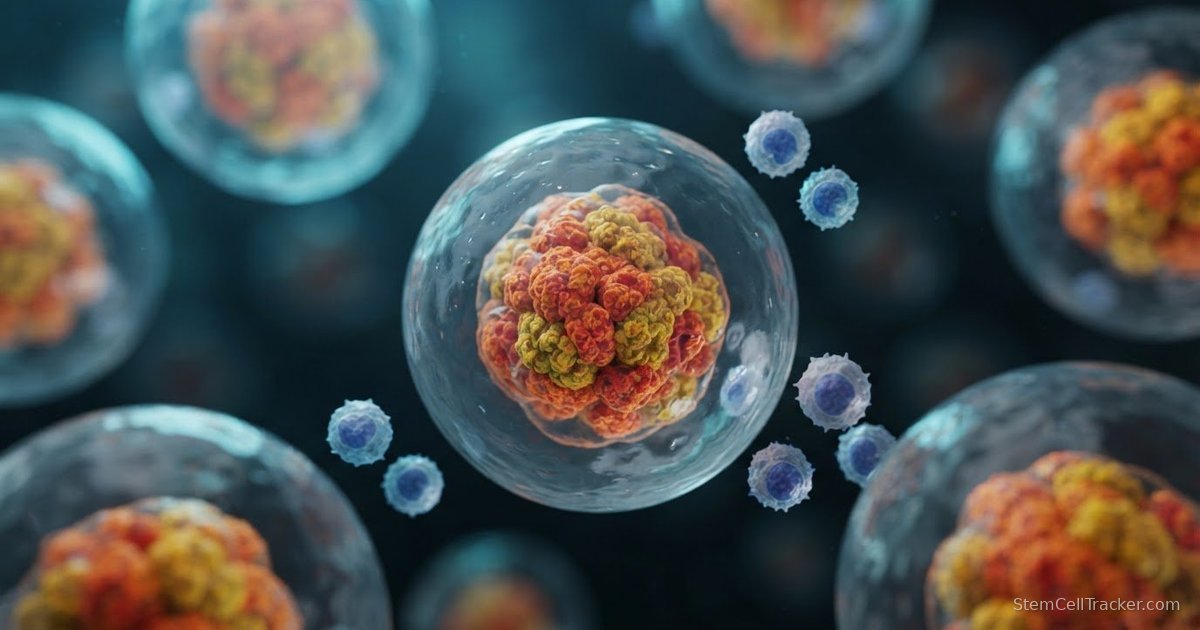
A Canadian type 1 diabetes cell therapy designed to protect transplanted insulin-producing cells without lifelong anti-rejection drugs has won new funding to finish its lab work and prepare for a first human trial. Allarta Life Science, a preclinical company based at McMaster Innovation Park in Hamilton, Ontario, announced on November 16, 2026 that it received an award from Breakthrough T1D (formerly JDRF) for its LifeSpheres hydrogel technology.
The news matters because the biggest barrier to islet cell transplants today is not only the supply of cells. It is the immune-suppressing medication that recipients must take for life, which carries real risks and keeps most people with type 1 diabetes from qualifying. Allarta is one of several groups trying to remove that barrier. The company has not tested its approach in people yet, and the award does not come with a public dollar amount or a trial start date.
What Allarta Announced
According to the company, the award comes through Breakthrough T1D’s Industry Discovery and Development Partnership program. It supports Allarta’s final preclinical research and its planned first-in-human clinical trial, and it follows a 2023 award for earlier work on helping protected cells survive longer.
The technology wraps insulin-producing cells in a synthetic hydrogel. The goal is a coating that lets glucose, oxygen and insulin pass through while keeping immune cells and antibodies out. The approach began in the McMaster University lab of chemistry professor Harald Stover, who co-founded Allarta in 2019 with chief operating officer Maria Antonakos.
“Allarta’s preclinical studies on its LifeSphere technology are promising,” said Asja Guzman, associate director of cell therapy research at Breakthrough T1D, in the company release.
Stem Cell Tracker Analysis: What We Found
The most recent data are conference abstracts, not a full peer-reviewed paper. Allarta’s latest public results appear in a poster abstract (2427-P) published in the journal Diabetes for the American Diabetes Association’s 2026 Scientific Sessions. It reports that the hydrogels can be tuned to block IgG antibodies while keeping encapsulated cells alive and working. Encapsulated rat islets controlled blood sugar “for weeks” in diabetic mice and rats, and the function of both human donor islets and human stem cell-derived islets was extended in mice, based on lower blood glucose and higher C-peptide. The abstract describes the hydrogels as retrievable and says they worked without any immunosuppression. An earlier 2024 ADA abstract reported similar animal results.
The first human trial is planned with donor islets, not stem cells. The 2026 abstract states the company is running regulatory-enabling studies in preparation for “a first-in-human clinical trial with donor-derived islets.” Stem cell-derived islets have been tested in mice, but the first clinical step described publicly uses cells from deceased organ donors, which are in limited supply.
No trial is registered yet. A search of ClinicalTrials.gov for “Allarta” and “LifeSpheres” on November 16, 2026 returned no registered studies. The release does not give a start date, a target country, or the size of the award. The abstract lists funding from a JDRF grant (2-IND-2023-1449-I-X), which matches the 2023 award the company mentions.
Context: encapsulation is hard. In March 2025, Vertex stopped development of VX-264, which placed stem cell-derived islets inside an immune-shielding device. The company said it was generally safe but did not raise C-peptide enough to help patients. By contrast, Vertex’s unencapsulated stem cell-derived islets, zimislecel, given with standard immunosuppression, led to insulin independence in 10 of 12 participants at one year in a 2025 New England Journal of Medicine study. Trevor Reichman, the transplant surgeon quoted in Allarta’s release and a member of its scientific advisory board, was the first author of that paper. Donor islet transplants have been possible since the Edmonton Protocol in 2000, and the FDA approved the donor islet therapy Lantidra in 2023, but both require immunosuppression.
Why Islet Transplants Without Immunosuppression Matter
About 9.5 million people worldwide live with type 1 diabetes, according to figures Breakthrough T1D cites in the release. Islet cell transplants can restore some natural insulin production, but anti-rejection drugs raise the risk of infections and other side effects. That is why current options are mostly limited to people with severe, hard-to-control low blood sugar episodes.
A coating that protects cells on its own could widen who is eligible. Pairing that kind of protection with an unlimited supply of stem cell-derived islets is the long-term goal for much of the field. Allarta’s data so far are in rodents, and animal results often do not carry over to people. Scar tissue forming around capsules, known as pericapsular overgrowth, has limited many past encapsulation attempts, and the abstract notes it was among the factors the team measured.
To learn more about how these cells work, see our guide What Are Stem Cells? and our October 2026 stem cell news recap, which covered other diabetes cell therapy updates.
What This Means for Patients
This type 1 diabetes cell therapy is not available to patients and has not been tested in people. The award pays for the final lab and animal studies needed before regulators can review a trial application. Even if that goes smoothly, a first safety study would likely involve a small number of adults, use donor islets, and take years to read out before any larger trial.
People who might eventually benefit are those with type 1 diabetes who could receive islet cells without taking lifelong anti-rejection drugs. Today, the approved islet option in the U.S. still requires immunosuppression and is limited to a narrow group of patients.
Be cautious of any clinic selling “stem cell cures” for diabetes. No encapsulated islet product is approved anywhere. Our guide to stem cell clinic red flags explains what to watch for. If you are interested in clinical trials, talk with your endocrinologist or diabetes care team.
Sources
- Original announcement: Allarta Life Science press release via GlobeNewswire (Nov. 16, 2026)
- Primary data: Stover H. 2427-P: Towards Clinical Application: Permanently Cross-Linked Hydrogels to Deliver Functional Islets. Diabetes, 2026; 75 (Supplement 1)
- 226-OR: Immunoprivileged Hydrogels Recover Normoglycemia for Extended Duration in Immunocompetent Diabetic Animals. Diabetes, 2024; 73 (Supplement 1)
- ClinicalTrials.gov search for Allarta (no registered studies as of Nov. 16, 2026)
- Reichman TW et al. Stem Cell–Derived, Fully Differentiated Islets for Type 1 Diabetes. NEJM, 2025
- Vertex: Program Updates for Type 1 Diabetes Portfolio (March 28, 2025)
- Shapiro AMJ et al. Islet Transplantation in Seven Patients with Type 1 Diabetes Mellitus. NEJM, 2000
- FDA: FDA Approves First Cellular Therapy to Treat Patients with Type 1 Diabetes (2023)
Reviewed by T. Lancaster, Editor. Stem Cell Tracker uses AI tools to help research and draft stories; see our Editorial Policy. This article is for education only and is not medical advice.