
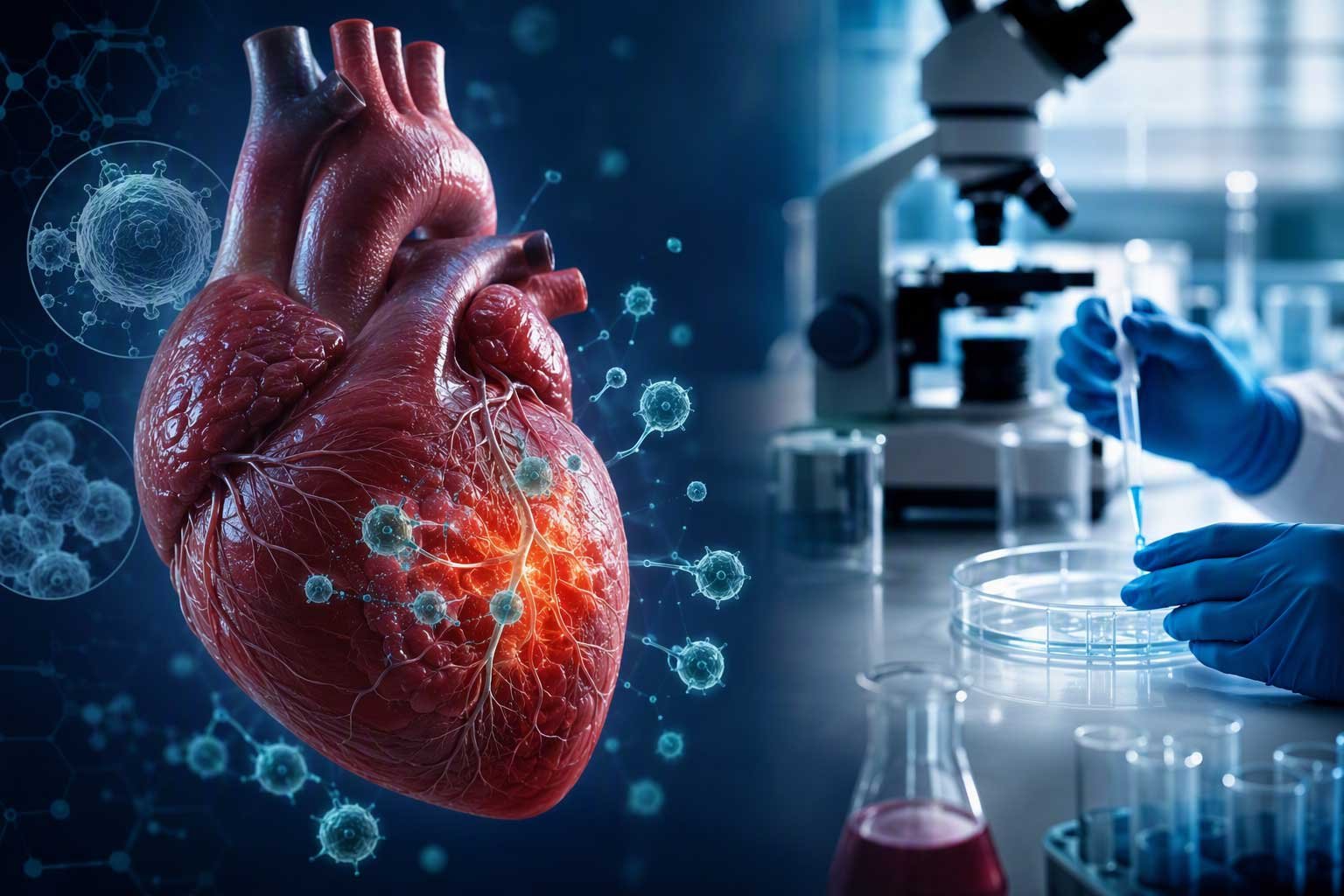
A $28.7 million commitment from The Marcus Foundation is helping move a stem cell based heart-regeneration therapy toward its first human clinical trial at the University of Southern California.
The gift, which is often rounded to $30 million in headlines, will support research led by Chuck Murry, MD, PhD, director of the USC Stem Cell Center. The program is developing stem cell derived heart muscle cells designed to repair tissue damaged by a severe heart attack.
The funding marks an important transition for the project: after decades of laboratory research, the therapy is approaching testing in people. It is also a reminder that promising regenerative-medicine research must still pass through carefully controlled clinical studies before it can become a treatment option.
Aiming to repair heart muscle after a heart attack
A major heart attack can permanently damage cardiac muscle. Unlike some other tissues, the adult heart has limited ability to replace lost muscle on its own. The resulting weakness can reduce the heart’s ability to pump blood and may affect a person’s health and quality of life for years.
Current cardiovascular care can help stabilize patients and manage the consequences of a weakened heart. The USC approach takes a different aim: introducing living, stem-cell-derived heart muscle cells into damaged areas in the hope that they will contribute to repair and coordinate with the surrounding tissue.
That outcome is still a scientific objective, not an established clinical result. The upcoming trial will be an early test of whether the approach can be delivered safely and whether researchers can observe signs that it is biologically active.
What the $28.7 million will fund
According to USC, the commitment will support two connected lines of work.
The first is a clinical trial expected to begin in 2027 at Keck Hospital of USC, with a second site at the University of Washington. The study is planned to enroll about 18 people who have experienced a severe heart attack that caused substantial damage to the heart muscle.
Because the study is small and early-stage, its main goals will be safety and feasibility. Researchers will monitor how participants respond to the procedure and look for early indications of biological activity or changes in cardiac function. A study of this size is not designed to establish whether the therapy improves survival or works better than existing care across the broader heart-disease population.
The second line of work will examine the immune response to transplanted cells. Scientists hope to develop strategies that could reduce or eventually eliminate the need for immunosuppressive drugs – medications that can carry significant risks – for patients receiving regenerative cardiac therapies.
Why the immune response matters
Cell transplantation creates a central challenge: the body may recognize transplanted cells as foreign and attack them. Immunosuppressive medicines can help prevent rejection, but long-term use may increase the risk of infections and other complications.
Understanding how immune cells respond to transplanted heart muscle cells could therefore be as important as the cells’ ability to function in the heart. If researchers can find a safer way to manage that response, future cell-based therapies may become easier to deliver and maintain.
For now, this work remains part of the research program supported by the foundation’s gift. It should not be interpreted as evidence that patients can already receive this therapy outside an approved clinical study.
A major funding milestone, not a finished treatment
The Marcus Foundation’s commitment is significant because it supports a therapy moving from the laboratory toward human testing. USC describes the award as the foundation’s largest gift to the university and one of its largest gifts to academic medicine.
Still, the most meaningful milestones lie ahead. Researchers will need to show that the therapy can be manufactured consistently, delivered safely, and tolerated by patients. Later studies will need to determine whether it improves heart function and patient outcomes, and how its benefits compare with existing treatments.
That process can take years. Many therapies that appear promising in laboratory studies do not ultimately prove safe or effective in larger clinical trials. Early results should therefore be read as evidence about the next research question – not as a guarantee of a breakthrough.
What to watch next
The next developments will include details about the trial design, regulatory progress, participant enrollment, safety findings, and any early measures of cardiac function. Researchers will also continue investigating how transplanted cells interact with damaged heart tissue and the immune system.
The $28.7 million commitment gives this program substantial resources to pursue those questions. Whether it becomes a successful heart-regeneration treatment will depend on the evidence produced in the clinical studies ahead.
Follow Stem Cell Tracker for evidence-based coverage of stem cell research, clinical trials, and developments in regenerative medicine.