

An experimental ovarian cancer cell therapy made from stem cells has finished the animal safety testing and test manufacturing needed before human trials, its developer said today. Ernexa Therapeutics says it still plans to ask the FDA for permission to start a first human study of ERNA-101 before the end of 2026, with dosing of the first patients expected in the first half of 2027.
ERNA-101 is aimed at platinum-resistant ovarian cancer, a form of the disease that no longer responds to standard platinum chemotherapy. The therapy has not yet been given to any person, and its safety and effectiveness in humans are unknown.
What Ernexa Announced About ERNA-101
In a press release issued at 8:45 a.m. ET on November 23, 2026, the Cambridge, Massachusetts company said it has completed preclinical biodistribution and toxicology studies, plus an “engineering” manufacturing run, a practice batch used to check that the product can be made consistently. It said its Investigational New Drug (IND) application, the filing the FDA must clear before a trial can begin, remains on track for submission before year-end.
According to the company, ERNA-101 collected mainly at tumor sites in animal studies and showed no ERNA-101-related toxicity at the doses tested. The company also states plainly that “the safety and efficacy of ERNA-101 have not been established in humans.”
How This iPSC-Derived Cell Therapy Is Supposed to Work
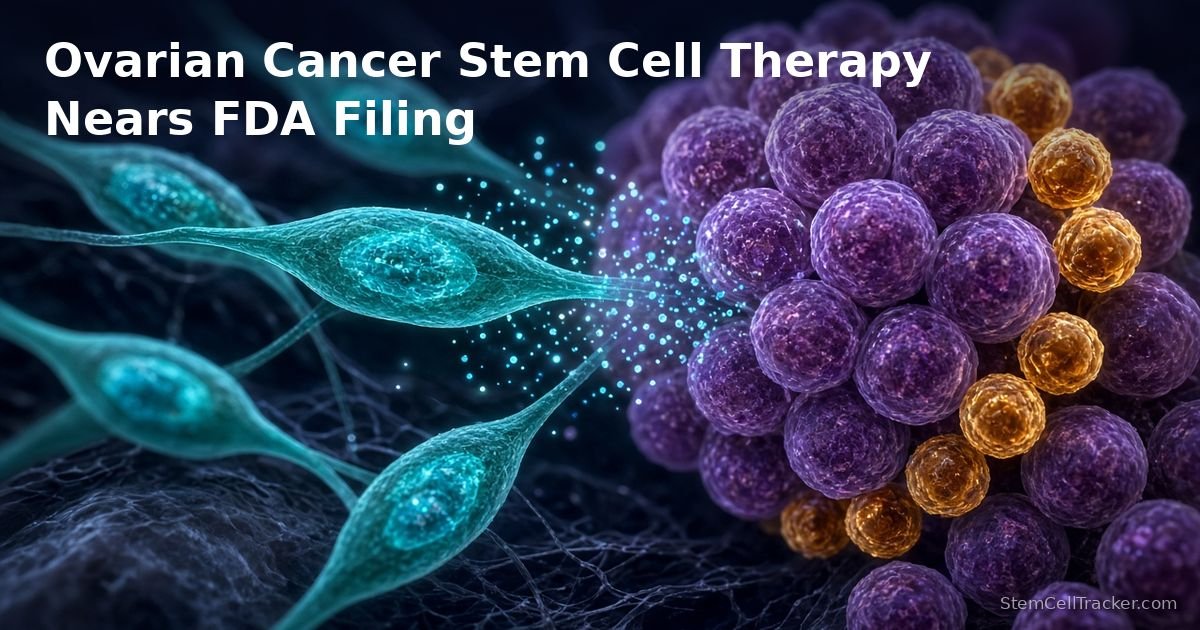
ERNA-101 starts as induced pluripotent stem cells (iPSCs), adult cells reprogrammed into a stem-cell-like state. Ernexa turns those into mesenchymal stem cells, which it calls iMSCs. The cells are engineered to release a combined immune signal made of two proteins, IL-7 and IL-15, that help activate T cells. The idea is that the cells travel to tumors and release that signal there, turning an immune-suppressed tumor into one the immune system can attack.
Because the cells come from a single iPSC source rather than each patient, the therapy is designed to be “off-the-shelf.” That is a different approach from CAR-T therapies, which are usually made from each patient’s own immune cells.
Stem Cell Tracker Analysis
We checked Ernexa’s earlier announcements, its latest SEC filing, conference abstracts, and the federal trial registry. Here is what the press release leaves out.
The timeline has slipped. In a July 15, 2026 release, Ernexa said it planned to file its IND in the third quarter of 2026 and start a first-in-human Phase 1 trial in the fourth quarter. Today’s release moves the IND filing to “before year-end” and the first human study to the first half of 2027.
The headline results come from a combination, in mice. Today’s release says ERNA-101 combined with an anti-PD-1 checkpoint drug produced complete tumor regression in ovarian cancer models. The July release gave more detail on an independent repeat study: the combination cleared tumors in 10 of 15 animals, while none of the 45 animals given ERNA-101 alone, anti-PD-1 alone, or no treatment had complete tumor clearance. That suggests the cells on their own did not clear tumors in that study.
The data are in conference abstracts, not a full peer-reviewed paper. We found the work presented as meeting abstracts, including an AACR abstract in Cancer Research and an abstract in the Journal of Clinical Oncology supplement. We did not find a full journal article laying out the methods and results for independent review.
No trial is registered yet. A search of ClinicalTrials.gov for “ERNA-101” and for Ernexa as a sponsor returned no studies as of today, which is expected before an IND is filed and cleared.
Funding is tight. Ernexa’s quarterly report filed with the SEC in November says the company had about $5.6 million in cash on September 30, 2026, which it called less than needed for its operating plan over the next twelve months. That statement sits in the filing’s going-concern assessment, where the company says it expects its at-the-market stock sales facility to cover a significant part of the gap. It reported a $12.5 million net loss for the first nine months of 2026.
Moving from IND clearance to a first patient often takes months. For context on how FDA clearance steps work for cell therapies, see our coverage of the NG01 expanded access clearance in MS and Japan’s first approved iPS cell transplant for Parkinson’s.
What This Means for Patients
Women with platinum-resistant ovarian cancer, and their families, are the group this research is meant to help. That group has limited options today, which is why new approaches draw attention.
Right now, ERNA-101 is not available anywhere. It has only been tested in animals, and no human trial is open or registered. If the FDA clears the company’s application, a small Phase 1 safety study could start in 2027. Phase 1 trials mainly test safety and dosing, so even good early results would be years from an approved treatment.
Be cautious of any clinic offering “stem cell therapy for ovarian cancer” outside a registered trial. Our stem cell clinic red flags guide explains warning signs. If you or a family member has ovarian cancer, talk with your oncologist about current treatments and clinical trials you may qualify for, which you can search on ClinicalTrials.gov.
What Comes Next
The next milestone to watch is the IND submission itself, Under FDA rules, a trial can generally begin 30 days after the agency receives an IND unless the FDA places it on hold. Once a trial is cleared, it should appear on ClinicalTrials.gov with its design, enrollment target, and sites.
Sources
- Ernexa Therapeutics press release, November 23, 2026: “Ernexa Therapeutics Nears Transformational Clinical Milestone Following Completion of Key ERNA-101 Manufacturing Activities; IND Filing on Track Before Year-End”
- Ernexa Therapeutics press release, July 15, 2026: independent validation of ERNA-101 in ovarian cancer models
- Ernexa Therapeutics Form 10-Q for the quarter ended September 30, 2026: SEC EDGAR
- AACR abstract PR001, Cancer Research: “Gene-modified iPS-derived MSC restore a ‘Hot’ immune microenvironment in high-grade serous ovarian cancer”
- ASCO abstract e14522, Journal of Clinical Oncology 2026 supplement: IL7-IL15 fusokine-secreting iPSC-derived mesenchymal stromal cells in ovarian cancer
- ClinicalTrials.gov search: ERNA-101
Reviewed by T. Lancaster, Editor. Stem Cell Tracker uses AI tools to help research and draft stories; see our Editorial Policy. This article is for education only and is not medical advice.