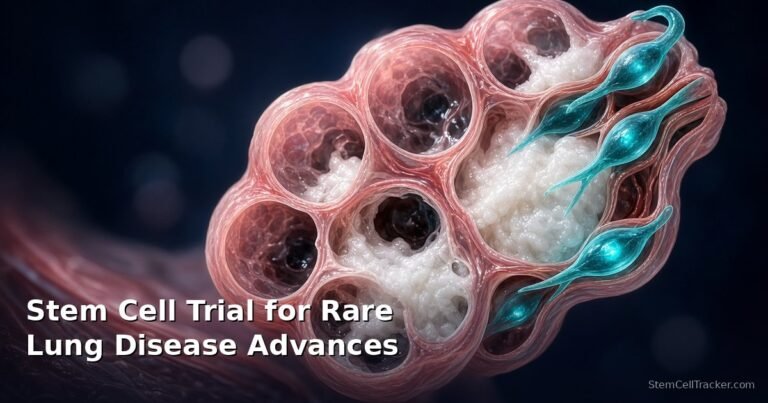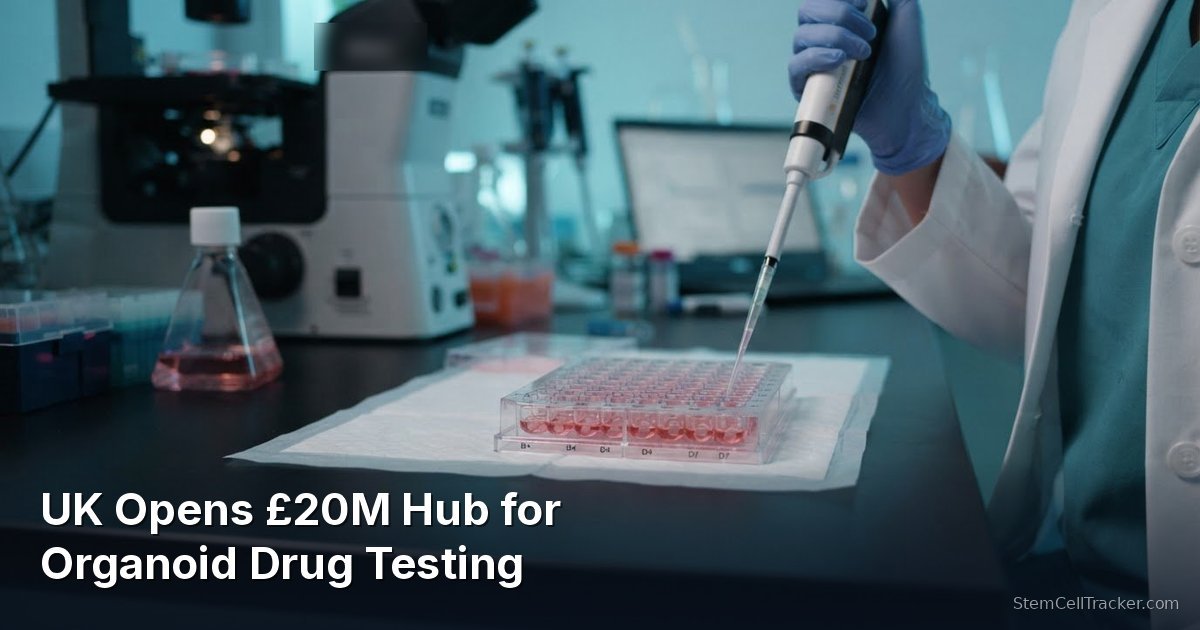
Organoids for drug testing got a major boost in the UK on November 27, 2026, when a £20 million national center opened at the Cambridge Stem Cell Institute. The UK Pre-clinical Translational Models Hub will test and standardize lab-grown human disease models, including organoids and stem cell models, so drug developers can rely on them before medicines reach clinical trials.
For patients, the goal is fewer failed drug trials and faster access to treatments that work. The hub does not treat anyone, and its impact on new medicines will take years to measure.
What the Cambridge Organoid Hub Will Do
According to the University of Cambridge announcement, the hub is hosted by the Cambridge Stem Cell Institute with the MRC Laboratory of Molecular Biology and the Wellcome Sanger Institute. It focuses on what researchers call New Approach Methodologies (NAMs): organoids grown from donated patient tissue, other advanced cell-based models, and computational tools that use AI.
Cambridge says hundreds of these models already exist but are rarely used outside the lab that built them, because of problems with reproducibility, validation and standardization. The hub plans to work with academic, NHS and industry partners to validate models, and with regulators to set shared benchmarking standards.
The hub’s project page lists three model types it will prioritize: tissue-derived organoids, cancer-derived organoid platforms, and induced pluripotent stem cell (iPSC) models. It names partner sites in Manchester, Birmingham, Southampton and Norwich. The leadership team includes Professor Matthias Zilbauer as director, with co-leads covering cancer organoids, brain organoids, and AI and data science.
“We are witnessing extraordinary advances in our ability to model human biology and disease. Yet many of these innovations never make it beyond the laboratories where they were developed,” Zilbauer said in the university release.
Stem Cell Tracker Analysis
We read the university release, the hub’s project page and the UK government announcement published the same day. Here is what we found.
- Funding is government core funding, not new research results. The government says the hub is core-funded by the Office for Life Sciences in partnership with UK Research and Innovation (UKRI). Cambridge says the £20 million was awarded earlier in 2026; today marks the official opening. The project page describes a “first phase” of MRC funding.
- One cost claim is not sourced. The government release says “some studies show” lab-grown organs could cut total pharmaceutical R&D costs by 10% to 26% and shorten one development stage by nearly a fifth. The release does not name those studies, so we could not check the figures against data. Readers should treat them as estimates.
- The trial-failure figure matches published analysis. Cambridge states that more than 90% of drug candidates entering human trials fail to win approval. That is consistent with a 2022 review in Acta Pharmaceutica Sinica B, which estimated about 90% of clinical drug development fails, often due to lack of efficacy or unmanageable toxicity.
- No performance data yet. None of the announcements report how well any specific model predicts human drug responses, which models will be validated first, or when results will be published. Those details will matter more than the launch itself.
- Animal research is not ending. The opening is tied to the UK’s Replacing Animals in Science Strategy, backed by £75 million. The government also confirmed a new UK Centre for the Validation of Alternative Methods, to be hosted by UKRI and coordinated by the NC3Rs. The government notes that responsible animal use will continue where alternatives are not yet available.
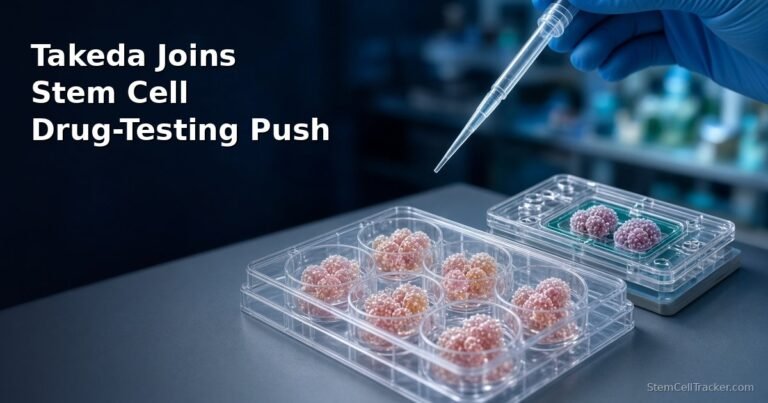
The hub builds on more than 15 years of organoid research. A landmark 2009 Nature study showed that single adult intestinal stem cells could grow into miniature gut structures in a dish, which helped launch the field. In the U.S., the FDA announced in April 2025 a plan to phase out animal testing requirements for monoclonal antibodies and other drugs, encouraging human-based methods such as organoids. Industry interest is growing too; we recently covered Takeda joining an ISSCR consortium on stem cell models for drug testing.
Why Human Disease Models Matter for Drug Development
Before a medicine is tested in people, developers rely on lab and animal studies to predict safety and benefit. When those predictions are wrong, drugs can fail late, after years of work. Organoids and stem cell-derived models use human cells, and some are grown from individual patients’ tissue, which may help researchers spot problems earlier or predict which patients will respond.
iPSC models are already moving toward the clinic in other ways. Japan, for example, recently treated the first patient with an approved iPS cell therapy for Parkinson’s disease. The Cambridge hub is different: it uses stem cell models as testing tools, not as treatments.
What This Means for Patients
The people most likely to benefit over time are those waiting on new medicines for conditions the hub’s researchers study, such as cancer, inflammatory bowel disease and Alzheimer’s disease. Better human disease models could help drug developers drop weak candidates sooner and move stronger ones into trials.
The timeline is long. The hub just opened, has not published validation results, and any effect on approved drugs would likely take years. Nothing from the hub is available to patients today, and it does not offer treatment or testing to the public.
If a clinic tells you an organoid or stem cell test can personalize your treatment, or sells unapproved stem cell products, ask for published evidence and check our guide to stem cell clinic red flags. Talk with your doctor about whether a registered clinical trial fits your situation.
Sources
- GOV.UK: Mini lab-grown human organs to boost search for new treatments as £20m Cambridge lab opens (Nov. 27, 2026)
- University of Cambridge: New UK hub launches to advance next-generation human disease models (Nov. 27, 2026)
- Cambridge Stem Cell Institute: UK Pre-Clinical Translational Models Hub project page
- GOV.UK: Replacing Animals in Science Strategy, one year on
- Sun D, et al. Why 90% of clinical drug development fails and how to improve it? Acta Pharmaceutica Sinica B (2022)
- Sato T, et al. Single Lgr5 stem cells build crypt-villus structures in vitro without a mesenchymal niche. Nature (2009)
- FDA: Plan to phase out animal testing requirement for monoclonal antibodies and other drugs (April 2025)
Reviewed by T. Lancaster, Editor. Stem Cell Tracker uses AI tools to help research and draft stories; see our Editorial Policy. This article is for education only and is not medical advice.