

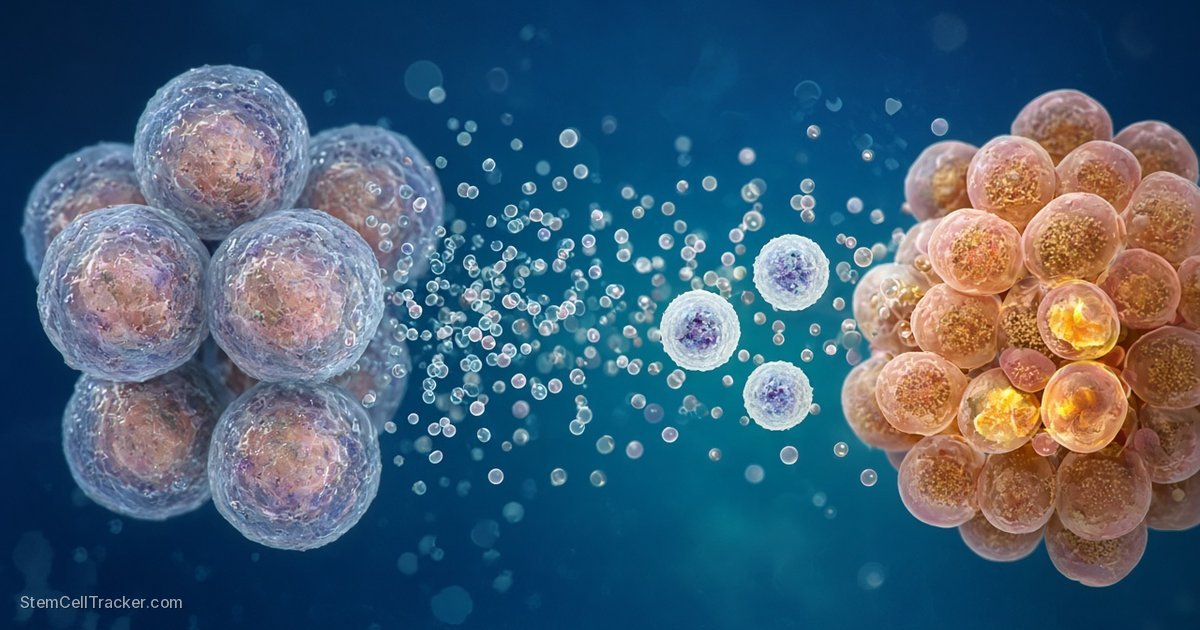
Tiny particles released by stem cells helped delay type 1 diabetes in mice by calming the immune attack on insulin-producing cells, according to a UCLA study published November 18, 2026 in Nature Nanotechnology. In the best-performing group, 55% of treated mice were still diabetes-free at the end of the 90-day study, UCLA Health reported.
The particles are extracellular vesicles, small packages that cells release to send signals to one another. The team found that vesicles from pluripotent stem cells, the kind that can become any cell type, regulated immune cells more strongly than vesicles from the mesenchymal stem cells often tested for inflammation. The work is in animals only. It has not been tested in people.
What the UCLA Team Found
The research was led by first author Jana Zárubová and senior author Song Li, a bioengineering professor at the UCLA Samueli School of Engineering and a member of the UCLA Broad Stem Cell Research Center. The idea came from pregnancy, when a mother’s immune system usually tolerates an embryo that carries the father’s genes.
In lab tests with mouse and human immune cells, vesicles from embryonic stem cells and induced pluripotent stem cells (iPSCs) cut inflammatory signals, slowed the growth of activated T cells, and boosted regulatory T cells, the immune cells that stop the body from attacking itself. The paper links this effect to lower levels of an enzyme called CDK8. The vesicles also carried proteins and microRNAs, including the miR-302 family, that were not found in mesenchymal stem cell vesicles.
To test protection in animals, the researchers transferred immune cells that attack insulin-producing beta cells into mice. They then injected iPSC vesicles under the skin near the neck, either alone or inside a gel that releases them over several days. Two doses, given a week apart, significantly delayed diabetes compared with untreated mice. Mice given the gel version had more regulatory T cells in their lymph nodes and kept more beta cells in the pancreas.
“One thing that surprised us was that a local injection could provide protection throughout the body,” Li said in the UCLA release.
The team also grew stem cells in 3D clusters in gently moving liquid instead of flat dishes. That raised vesicle production 3.4-fold per million cells, a step toward making enough consistent material for future testing.
Stem Cell Tracker Analysis: What We Found
The mouse model is small and short. A preprint version of the study posted on Research Square shows each survival group had 10 mice. The model uses transferred immune cells in mice that lack their own immune system, so it tests protection against one specific attacking T cell type, not the slow, natural disease seen in people. Mice were counted as diabetic when blood sugar stayed above 250 mg/dL for two days in a row.
It delays diabetes, it does not reverse it. The vesicles were given at the start, before diabetes set in. Li told UCLA that the best fit would be early-stage type 1 diabetes, when some beta cells still work, and that immune regulation alone would not replace cells already lost. The team says it still needs larger-animal studies, dosing work, long-term follow-up and checks on whether the treatment weakens defenses against infection.
The approach is patented and not in human trials. The paper discloses that three authors, including Li, are inventors on a pending University of California patent application (US 2024/0131079 A1) covering vesicles from induced pluripotent and embryonic stem cells for immune modulation. We found no registered trial of pluripotent stem cell vesicles for type 1 diabetes in a ClinicalTrials.gov search on November 18, 2026. The study was funded in part by the California Institute for Regenerative Medicine (grant DISC2-13163) and the National Institutes of Health.
Context: vesicle therapies are early. A 2024 systematic review in the Journal of Extracellular Vesicles found that extracellular vesicle clinical trials remain few, small, and inconsistent in how products are made and measured. No extracellular vesicle product is FDA-approved to treat any disease.
Why This Matters for Type 1 Diabetes
In type 1 diabetes, the immune system destroys the beta cells that make insulin. Insulin replaces the hormone but does not stop the attack. A treatment that shields remaining beta cells could, in theory, slow the disease in people diagnosed early. The same kind of immune calming could also help protect transplanted islet cells, a problem other groups are tackling with gels and capsules, as in our recent report on Allarta’s islet coating.
Because the vesicles are cell-free, they could be easier to store and dose than living cells. Making them from iPSCs, which can multiply almost without limit in the lab, could also give a steadier supply than adult stem cells. To learn more, see our guide What Are Stem Cells?
What This Means for Patients
This is mouse research. There is no treatment from this study available to patients, and no human trial has been announced. Moving from mice to people would require larger-animal studies, manufacturing and safety work, and a regulatory filing before a first small trial, which would take years.
If it reaches people, the most likely candidates would be those in the early stages of type 1 diabetes who still make some of their own insulin. It would not replace insulin for people with long-standing disease.
Be wary of clinics selling “exosome” or stem cell vesicle injections for diabetes. These products are not FDA-approved, and the FDA has warned about unapproved exosome products. Our guide to stem cell clinic red flags explains what to watch for. If you are interested in research studies, ask your endocrinologist or diabetes care team about clinical trials.
Sources
- Primary study: Zarubova J, Hasani-Sadrabadi MM, Wu Y, et al. Pluripotent stem cell-derived extracellular vesicles for systemic immune modulation in diabetes therapy. Nature Nanotechnology (2026)
- Original announcement: UCLA Health: Stem cell-derived nanoparticles modulate immune cells and help delay type 1 diabetes in mice (Nov. 18, 2026)
- Preprint of the study on Research Square (2025)
- US Patent Application 2024/0131079 A1
- ClinicalTrials.gov search: type 1 diabetes and extracellular vesicles (searched Nov. 18, 2026)
- Mizenko RR et al. A critical systematic review of extracellular vesicle clinical trials. J Extracell Vesicles, 2024
Reviewed by T. Lancaster, Editor. Stem Cell Tracker uses AI tools to help research and draft stories; see our Editorial Policy. This article is for education only and is not medical advice.