
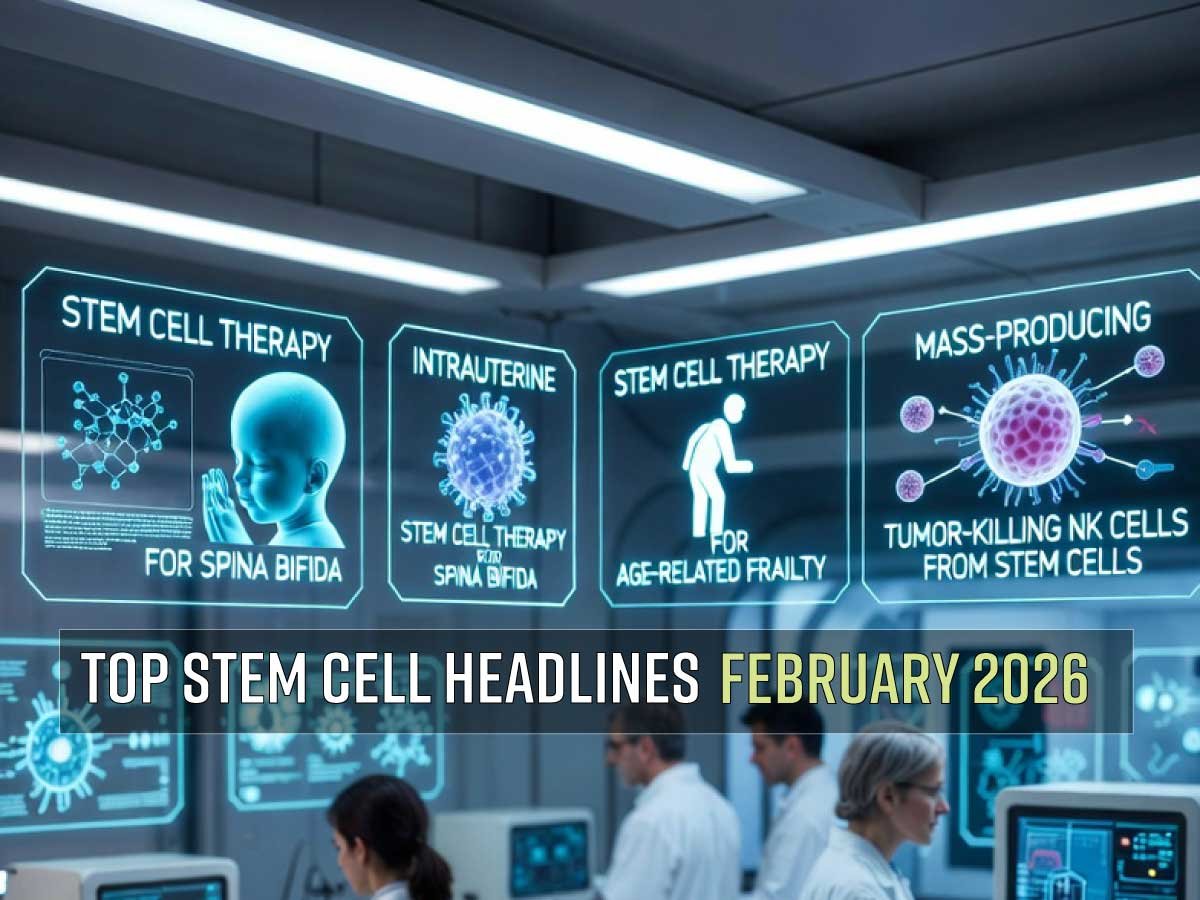
February 2026 marked a remarkable month for stem cell research, with several groundbreaking studies and announcements pushing the boundaries of regenerative medicine. From in-utero treatments for birth defects to potential game-changers in aging and cancer, these developments highlight the accelerating translation of stem cell science into real-world clinical impact.
A Milestone in Fetal Medicine: World-First In-Utero Stem Cell Therapy for Spina Bifida
One of the standout stories was the publication of the CuRe Trial results in The Lancet. Led by UC Davis Health, this Phase 1 study demonstrated that applying placenta-derived mesenchymal stem cells during fetal surgery for myelomeningocele (a severe form of spina bifida) was safe and feasible in six cases. The approach supplements standard fetal repair by potentially improving nerve function, mobility, and overall quality of life for affected children.
This in-utero regenerative strategy represents a major step forward in treating congenital defects before birth.
Sources
- Original Publication (The Lancet): Feasibility and safety of cellular therapy for in-utero repair of myelomeningocele (CuRe Trial): a first-in-human, phase 1, single-arm study – February 26–28, 2026.
- UC Davis Health Announcement (press release): First-ever in-utero stem cell therapy for fetal spina bifida repair is safe, study finds – February 26, 2026.
- Nature News: World-first stem-cell therapy shows promise for treating spina bifida in the womb – February 26, 2026.
- Science Magazine: Treating fetuses with stem cells proves safe in milestone spina bifida trial – February 26, 2026.
Stem Cells Show Strong Promise Against Age-Related Frailty
In late February, Longeveron Inc.’s ($LGVN) Phase 2b trial results, published in Cell Stem Cell, revealed that a single intravenous dose of mesenchymal stem cells (laromestrocel) significantly boosted physical function, endurance, and self-reported well-being in frail older adults over nine months compared to placebo.
Nature described it as the strongest evidence yet for treating frailty, a condition affecting up to 25% of people over 50, with potential to transform geriatric care and combat aspects of biological aging.
Sources
- Original Publication (Cell Stem Cell): Randomized phase 2b dose-escalation trial of stem cell therapy with laromestrocel for aging frailty — Published online February 25, 2026.
- Longeveron Press Release: Longeveron® Results of Phase 2b Clinical Trial Demonstrating Stem Cell Therapy Improved Condition of Patients with Age-Related Frailty Published in Cell Stem Cell — February 25, 2026.
- Nature News: Stem cells provide a potent treatment for frailty — February 25, 2026.
Scalable Cancer-Fighting Cells: One Stem Cell Yields Millions of NK Cells
Chinese researchers from the Chinese Academy of Sciences achieved a major oncology advance by engineering cord blood-derived stem cells to produce up to 14 million potent natural killer (NK) cells per starting cell—including CAR-NK versions engineered to target specific cancers.
This method promises “off-the-shelf” immunotherapies that are scalable and more effective, addressing key barriers in current NK cell therapies for solid tumors and other cancers.
Sources
Key Coverage/Summary: “One stem cell generates 14 million tumor-killing NK cells in major cancer breakthrough“ (via ScienceDaily, summarizing Chinese Academy of Sciences research) — February 17, 2026.
Additional Reports: This breakthrough was widely covered in mid-February 2026, often referencing work led by Prof. Jinyong Wang at the Institute of Zoology, Chinese Academy of Sciences. The primary method details appear in associated publications or announcements around that time (e.g., Nature Biomedical Engineering references in related coverage).
Other Notable Highlights from the Month
- Japan’s health ministry moved toward conditional approval for two pioneering iPSC-derived therapies (Amchepry for Parkinson’s and ReHeart for heart failure), marking a shift toward regenerative options for neurodegenerative and cardiac conditions—though some experts urged caution due to limited trial data.
- Ongoing discussions around stem cell applications in epilepsy (e.g., Neurona Therapeutics trials), diabetes reversal attempts, and broader anti-aging efforts fueled excitement in scientific circles and on platforms like X.
- Awards and events, such as the ISSCR Lifetime Achievement recognition for Drs. Allen and Connie Eaves, underscored the field’s foundational progress.
February 2026 showcased solid, evidence-based advances rather than hype-driven claims, with publications in top journals like The Lancet, Cell Stem Cell, and Nature driving momentum in pediatrics, geriatrics, and oncology.
These breakthroughs signal that stem cell therapies are steadily moving from lab promise to bedside reality, offering hope for conditions once considered untreatable.