
BioCardia said today it has finished consultations with Japan’s Pharmaceuticals and Medical Devices Agency (PMDA) on the application package for its CardiAMP cell therapy system in ischemic heart failure. The Sunnyvale, California company is now moving toward filing a marketing approval application in Japan, with a public target of treating its first Japanese patients and booking commercial revenue in 2028.
The Nov. 6, 2026 announcement is a regulatory milestone, not an approval. CardiAMP remains investigational. Still, finishing PMDA consultation on the materials themselves is a concrete step in one of the world’s largest cardiovascular device markets, and in a country that has already put regenerative medicine—including iPS cell products—on a fast track.
What CardiAMP cell therapy is
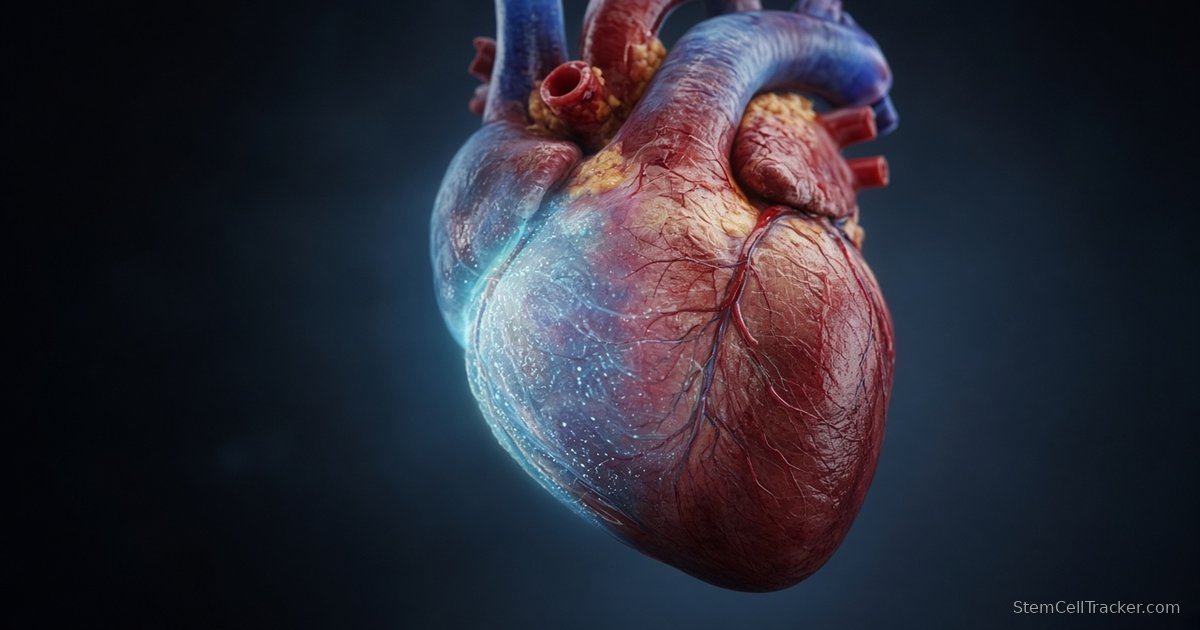
CardiAMP is an autologous (patient’s own) bone marrow mononuclear cell therapy delivered into the heart muscle through a catheter. A small bone marrow sample is screened, cells are processed at the point of care, and a cardiologist injects them into damaged heart tissue with BioCardia’s Helix delivery system. The company describes the goal as improving capillary density and reducing fibrosis in ischemic heart muscle. The U.S. Food and Drug Administration has granted CardiAMP Breakthrough Therapy designation for heart failure.
According to BioCardia, the therapy has been evaluated in three clinical trials covering more than 200 patient procedures, including two randomized, double-blind, placebo-controlled studies. That clinical base is what Japan’s PMDA has been reviewing as BioCardia prepares a Shonin (pre-market) submission.
Stem Cell Tracker Analysis
We checked the primary trial records and prior Phase 3 disclosures that most short write-ups skip:
- Trial IDs: The completed pivotal study is CardiAMP Heart Failure (NCT02438306), a Phase 3, double-blind trial that enrolled 125 patients (status: completed). The confirmatory U.S. study now recruiting is CardiAMP Heart Failure II (NCT06258447), targeting about 250 patients with ischemic heart failure with reduced ejection fraction; ClinicalTrials.gov lists primary completion around April 2027.
- Who qualifies in HF II: NYHA Class II or III, left ventricular ejection fraction greater than 20% and less than 40%, NTproBNP above 500 pg/mL, and a bone-marrow cell analysis score that meets BioCardia’s selection criteria. Sites currently listed as recruiting include Emory, Henry Ford, Morton Plant (BayCare), and the University of Wisconsin.
- Primary endpoint history: At ACC 2025, CardiAMP-HF’s hierarchical composite (death/transplant/LVAD, then nonfatal MACE, then six-minute walk) did not reach statistical significance at 24 months (win ratio 1.01; P = 0.954). Total MACE was numerically lower with treatment (about 20% vs. about 32% in control) but that comparison also missed significance. A post-hoc subgroup with elevated NTproBNP/BNP above 500 pg/mL did reach significance on a Finkelstein–Schoenfeld composite (P = 0.020).
- Remodeling signal: At THT 2026, core-lab echo results showed less adverse left-ventricular remodeling in treated patients; in the elevated-NTproBNP subgroup, end-diastolic and end-systolic volume differences were clinically sized (>20 and 15 mL/m²) and statistically significant (P = 0.02 and 0.01).
- What today’s news is not: Completing PMDA consultation does not approve CardiAMP in Japan. BioCardia still must submit and clear full PMDA review. An earlier September 2026 company update had pointed to a possible Q4 2026 Shonin filing and, if review goes well, market clearance as early as Q4 2027—timing that today’s 2028 first-patient/revenue target roughly tracks.
In plain terms: Japan progress is real, but the U.S. pivotal composite missed its primary mark, and the strongest signals so far sit in biomarker-selected patients. That gap between headlines and the full dataset matters for anyone following heart failure cell therapy.
How this compares with other heart cell approaches
CardiAMP uses a patient’s own marrow cells. That is a different strategy from iPS cell–derived heart-muscle products such as the USC program that just won a $6.9 million CIRM grant toward late-2027 trials, or the earlier Marcus Foundation–backed USC heart trial plan. Autologous marrow avoids donor matching and some immune-rejection issues; iPS-derived muscle aims to replace scar with new beating cells but usually needs immunosuppression. Both remain investigational. For background on cell types, see our stem cells explained guide.
What This Means for Patients
Nothing about today’s PMDA news makes CardiAMP available in a clinic this week. In the United States it is still in confirmatory testing. In Japan, BioCardia has finished consultations on application materials and is aiming for a marketing submission, with first treated patients and revenue targeted for 2028 if regulators agree. That is years of review and manufacturing work away from routine care.
People most often discussed for this approach have chronic ischemic heart failure with reduced ejection fraction (roughly 20–40%) who remain symptomatic on standard drugs and devices. Even if Japan or the U.S. eventually clears the product, it would be a catheter-based hospital procedure after bone marrow screening—not an off-the-shelf infusion sold online.
Be cautious of clinics already selling “heart stem cell” packages. Many are unproven. Our stem cell clinic red flags checklist explains how to spot them. Talk with a cardiologist about guideline-directed care and whether any legitimate trial is open. This article is for education only and is not medical advice.
Sources
- BioCardia / GlobeNewswire: Completes Clinical Consultation Process with Japan’s PMDA for CardiAMP Cell Therapy System (Nov. 6, 2026, 8:30 a.m. ET)
- ClinicalTrials.gov: CardiAMP Heart Failure Trial (NCT02438306)
- ClinicalTrials.gov: CardiAMP Heart Failure II (NCT06258447)
- HCPLive: CardiAMP Phase 3 primary endpoint and NTproBNP subgroup results (ACC 2025)
- BioCardia: CardiAMP HF echocardiography results at THT 2026
Reviewed by Ty Lancaster, Editor. Stem Cell Tracker uses AI tools to help research and draft stories; see our Editorial Policy. This article is for education only and is not medical advice.