
For the first time anywhere, a stem cell therapy for Parkinson’s disease has moved out of the research trial and into regular patient care. Japanese drugmaker Sumitomo Pharma said on Friday, October 30, that a patient received its approved iPS cell transplant at Kyoto University Hospital in October. That makes it the first time someone has gotten this kind of treatment as an approved therapy rather than as a trial volunteer.
The short version: scientists grow replacement brain cells in a lab and place them where Parkinson’s has worn the original ones away. Here’s what happened, what the early results show, and what it does and doesn’t mean for patients.
What Happened: A Trial Treatment Becomes Real-World Care
Japan granted the therapy conditional approval in March 2026 after a small clinical trial. Sumitomo Pharma mentioned the first transplant in its earnings release, without sharing details about the patient. The company said it plans to treat 20 to 30 patients by March 2029, and it’s also running a clinical trial in the United States.
Think of it like a new bridge that passed its first inspection. Traffic is now allowed on it, but engineers keep watching closely. The treatment only earns full approval if its safety and benefits hold up over roughly the next seven years, according to Japanese media.
How This Stem Cell Therapy for Parkinson’s Works
Parkinson’s symptoms such as tremor, stiffness, and slow movement happen because the brain loses the cells that make dopamine, a chemical messenger that helps control movement. Picture a city slowly losing its power plants: the wiring is still there, but the lights flicker and dim.
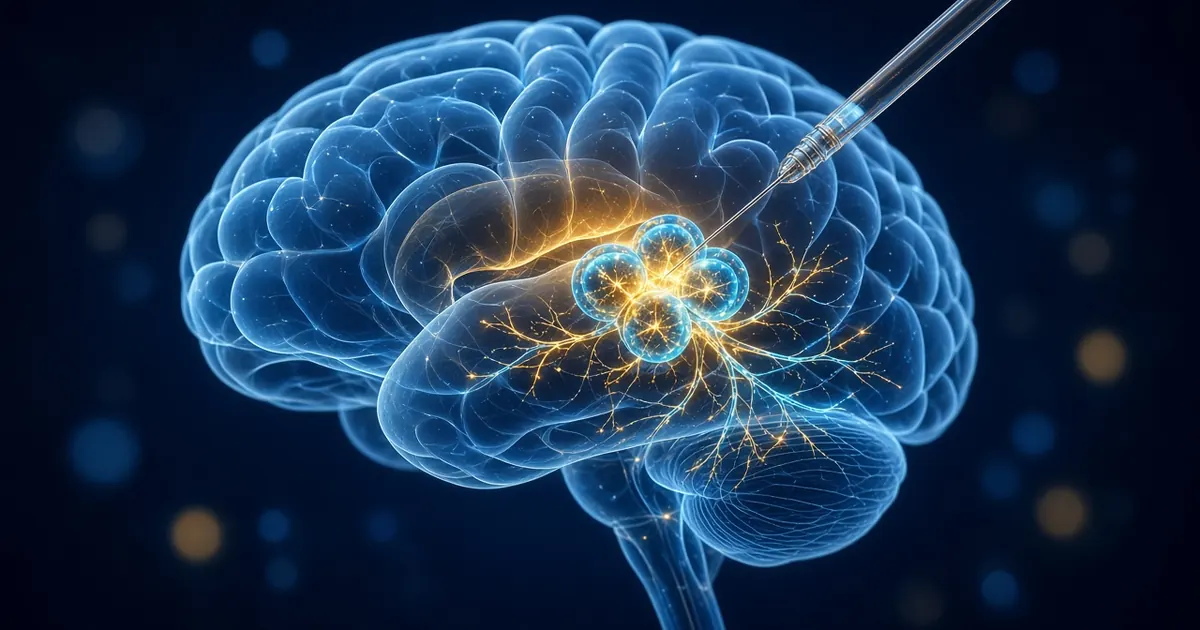
The new therapy aims to build new power plants. It starts with induced pluripotent stem (iPS) cells, which are ordinary adult cells from healthy donors that have been “rewound” to an early, flexible state. Like blank clay, they can then be shaped into almost any cell type. In this case, they’re guided to become early-stage dopamine-producing neurons, which are then transplanted into both sides of the patient’s brain. (New to the basics? Start with our guide, What Are Stem Cells? A Simple Guide.)
What the Clinical Trial Showed
The approval rests on a Kyoto University trial with seven patients aged 50 to 69. Each received either 5 million or 10 million cells on both sides of the brain and was followed for two years.
- Safety: No major adverse effects were reported.
- Symptoms: Four of the seven patients showed improvement.
- Scale: Seven people is a very small group, so the results are encouraging but far from final.
That’s a promising first chapter, not the whole book. Three of the seven patients didn’t show measurable improvement, and two years is short for a disease that progresses over decades.
Why It Matters for Patients and Families
Today’s Parkinson’s medicines, like levodopa, mainly top up dopamine from the outside. That works a bit like refilling a leaky tank, and over time the effects can wear off and become harder to manage. A cell replacement approach goes after the root problem instead by replacing the cells that make dopamine in the first place.
It’s also a milestone for iPS cell science in general. Japan conditionally approved a second iPS-based therapy in March, using heart muscle cell sheets for severe heart failure, and a hospital in Osaka performed the first surgery with those sheets about a month ago. Lab-grown replacement tissue is starting to show up in real clinics.
The Fine Print: Important Limits
- Conditional, not final: The approval depends on years of follow-up data confirming that the therapy is safe and that it works.
- Japan only, for now: Patients elsewhere can only get this approach through regulated clinical trials, including Sumitomo Pharma’s U.S. study.
- Not a cure yet: The evidence so far shows improvement in some patients, not that the disease is reversed.
- Limited access: Only a few dozen patients are expected to be treated over the next few years.
Headlines like this one often bring out clinics selling unproven “stem cell cures” for Parkinson’s. Before you consider any treatment, read our stem cell clinic red flags checklist.
What Comes Next
Over the next few years, watch for three things: outcome data from the first group of real-world patients, results from the U.S. trial, and whether the benefits last. If they do, iPS cell therapy for Parkinson’s could become one of the defining regenerative medicine stories of the decade. For more background, see our top 10 stem cell breakthroughs of 2025.
Source: “1st patient undergoes pioneering stem-cell treatment for Parkinson’s,” Philstar.com (AFP), October 31, 2026. Company information: Sumitomo Pharma.