
Scientists in Germany have found a hidden backup supply of blood stem cells that can stay asleep for months at a time, yet still wake up and rebuild an entire blood and immune system. The discovery, made in mice, could one day help make bone marrow transplants work better and help explain how our blood and immune defenses stay strong, or wear down, as we age.
The study comes from the German Cancer Research Center (DKFZ) and the HI-STEM stem cell institute in Heidelberg, and was published in the journal Cell Stem Cell. Right now it is mouse-only research, so it is a step toward better treatments rather than a new treatment itself.
What Blood Stem Cells Do, in Plain Words
Your body makes billions of new blood cells every day: red cells that carry oxygen, white cells that fight germs, and platelets that stop bleeding. All of them come from blood stem cells tucked inside your bone marrow. (New to the basics? Our guide What Are Stem Cells? A Simple Guide walks through it.)
Think of these stem cells like a factory crew. If the whole crew worked nonstop, it would burn out early. So many blood stem cells spend most of their time resting and only clock in when the body needs extra help, such as during an infection.
A “Deep Sleep” Group of Blood Stem Cells Nobody Was Counting
To find blood stem cells, scientists usually look for certain proteins on the cell surface, a bit like checking for a name badge. One of the most important badges is a protein called CD150. Cells without it were often not counted as true blood stem cells at all.
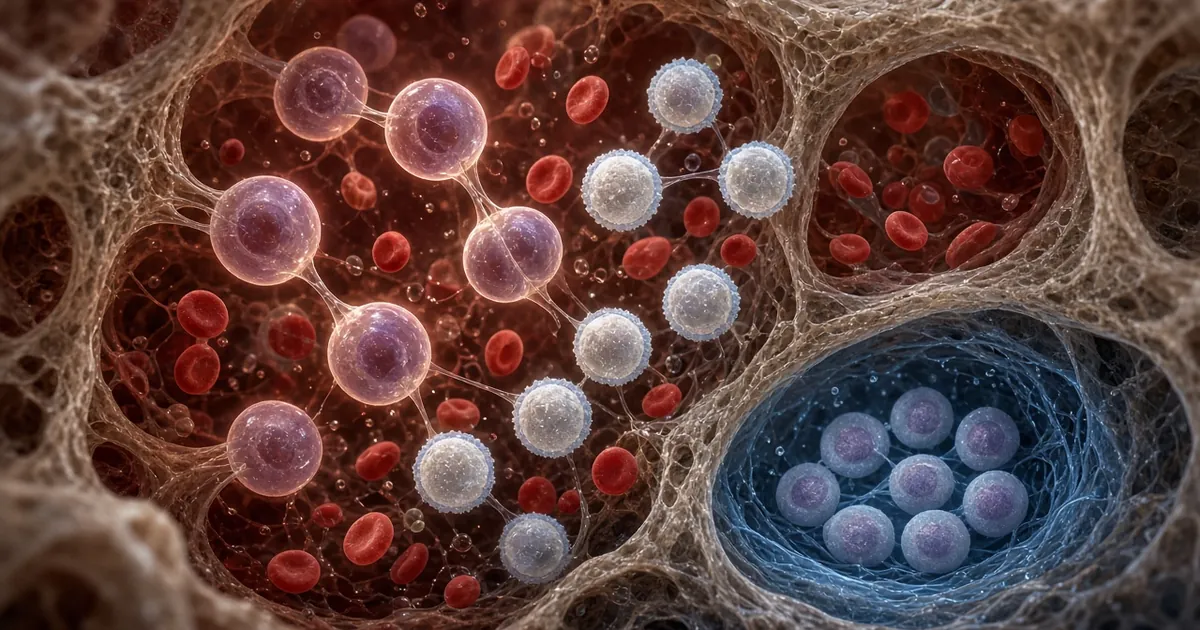
The Heidelberg team found that a special group was hiding among those overlooked cells. These cells carry a different badge, a protein called EPCR, and they sleep far more deeply than the stem cells researchers already knew about.
The numbers make the point. After more than 200 days, only about 2% of the familiar blood stem cells still showed a sign of being at rest. Among the newly described group, about 10% to 15% were still resting. It is like finding a reserve team on the bench that almost never gets called in, which keeps them fresh for when they are truly needed.
Why the Deep Sleepers Matter for Immunity and Aging
Inflammation is one of the main alarms that wakes blood stem cells up so the body can make more immune cells. But every wake-up call uses up a little of the stem cell reserve. In the mice, the new deep sleepers reacted to these alarms much more cautiously than ordinary blood stem cells, a bit like a savings account you leave untouched while you spend from checking.
The two groups also lean toward different jobs. The well-known CD150-positive stem cells tend to make more red blood cells and platelets. The deep sleepers lean toward making immune cells, especially lymphocytes, the white blood cells behind much of our long-term germ defense. Still, both groups can make every major type of blood cell.
The strongest evidence came from transplant experiments. Even a single one of the new cells, moved into another mouse, could rebuild all the blood cell types and keep them going for life. That ability held up even when cells were transplanted again into further mice.
“We show here that blood stem cells do not constitute a uniform cell population,” said first author Dawn Lin, as quoted by DKFZ.
What This Could Mean for Bone Marrow Transplants
Blood stem cells are the active ingredient in bone marrow and stem cell transplants, which are used to treat leukemia and other serious blood disorders. Lead researcher Andreas Trumpp said that understanding how these cells stay working into old age could help improve those transplants and help keep the blood and immune system from weakening as we get older.
In practical terms, if doctors could one day spot and protect these long-lasting cells in human donors or patients, transplants might take hold more reliably and last longer. That is a hope for the future, not something available today.
The Limits: Mice First, People Next
- Mouse-only so far. The researchers say it has not yet been proven that a similar long-lived group exists in humans. Trumpp said the team already has early hints of it and that checking in people is their next project.
- No new treatment yet. This is basic science. It does not change how transplants are done today.
- Be wary of clinic claims. Research like this can be twisted into anti-aging sales pitches. If a clinic promises to “reawaken” your stem cells, check our stem cell clinic red flags checklist first.
The Bottom Line
Our blood factory may have a quiet emergency crew that we did not know about, at least in mice. These deep-sleeping blood stem cells seem built to last a lifetime and lean toward making immune cells. If the same crew turns up in people, it could open new ways to make transplants stronger and to keep the immune system sharper with age. For more of the month’s big stories, see our October 2026 stem cell breakthroughs recap.
What This Means for Patients
The result is hopeful for the future, not for today. Finding a backup crew of deep-sleeping blood stem cells could one day help people who need bone marrow or stem cell transplants, such as patients with leukemia and other serious blood disorders, and may help explain why immunity fades with age. But so far this has only been seen in mice. Turning a mouse discovery into an approved human treatment usually takes many years of further lab work and clinical trials, and many promising findings never make it that far.
Nothing based on this study is available to patients today. If a clinic offers a treatment built on “dormant” or “reserve” stem cells, treat it like a too-good-to-be-true sales pitch and check our stem cell clinic red-flags checklist first. If you or a loved one is facing a transplant or a blood disorder, your doctor or transplant team is the best place to ask which options fit your situation.
Source: German Cancer Research Center (DKFZ), “Stem Cells in Deep Sleep as a Secret Reserve” (November 2, 2026).
Study: Lin DS, Trumpp A, et al. “EPCR Expression Marks CD150neg Deeply Dormant Long-term Hematopoietic Stem Cells,” Cell Stem Cell, 2026.
Reviewed by Ty Lancaster, Editor. Stem Cell Tracker uses AI tools to help research and draft stories; see our Editorial Policy. This article is for education only and is not medical advice.