
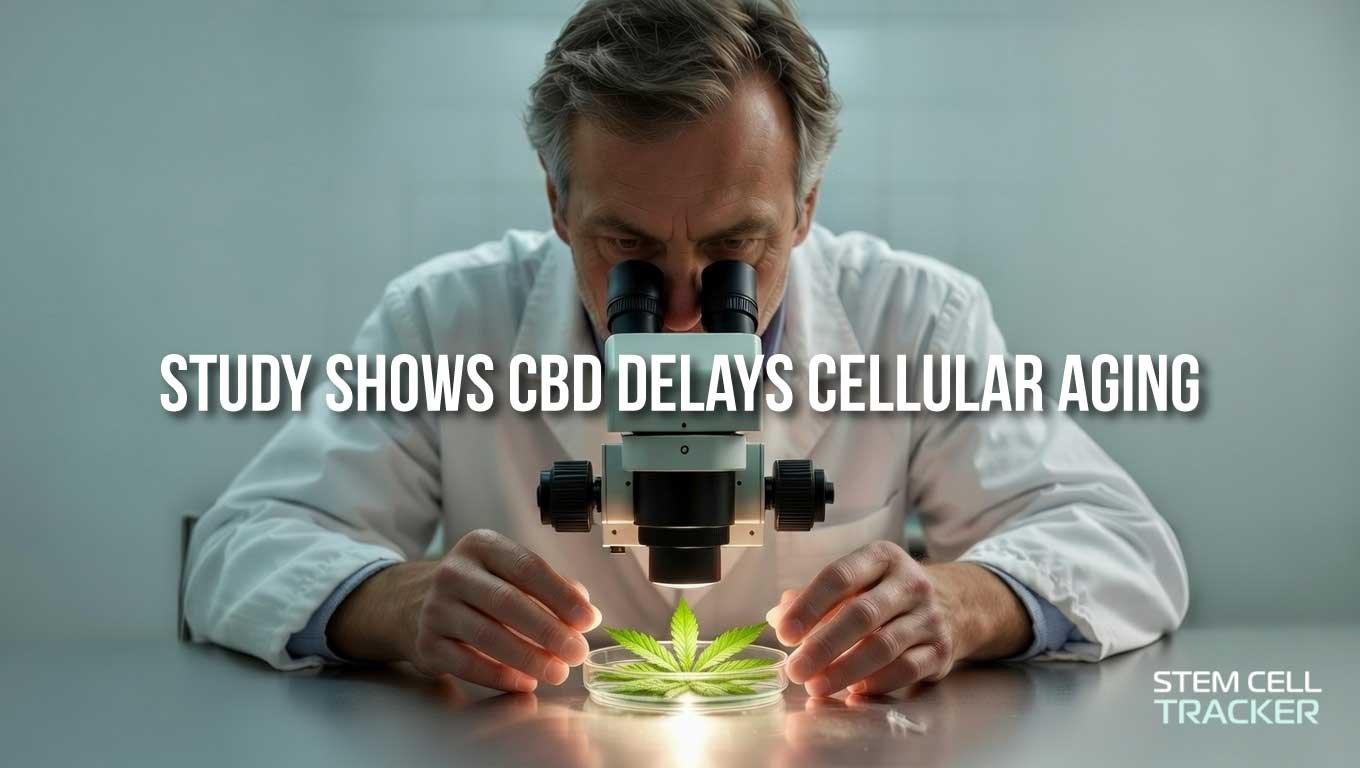
Cannabidiol Enhances SIRT1 and Autophagy for the Maintenance of Human Mesenchymal Stem Cells, published in the journal In Vivo, investigated if low-dose cannabidiol (CBD) can significantly delay cellular aging in human mesenchymal stem cells (MSCs), offering potential improvements for regenerative medicine applications.
Also accessible via the National Institutes of Health (NIH) and reported on by The Marijuana Herald, the peer-reviewed study revealed that CBD enhances the stem cell properties (stemness) of human mesenchymal stem cells while postponing cellular aging (senescence).
This effect appears to occur primarily through the upregulation and activation of two major anti-aging pathways: Sirtuin 1 (SIRT1) and autophagy.
The discovery aligns with other recent research showing that CBD boosts SIRT1 expression, which in turn promotes autophagy, helping preserve stem cell function and delay age-related decline in cultured cells.
Key findings include:
Boosted Cell Proliferation and Self-Renewal
CBD treatment significantly accelerated the proliferation rate of MSCs while helping preserve their essential self-renewal abilities, allowing the cells to maintain their stem-like properties over extended culture periods.
Decreased Markers of Cellular Senescence
A marked reduction was observed in senescence-associated β-galactosidase (SA-β-gal) activity — a classic indicator of cellular aging — demonstrating that CBD effectively slows the onset of senescence in these stem cells.
Preservation of Telomere Length via hTERT Upregulation
CBD enhanced expression of the hTERT gene (encoding the catalytic subunit of telomerase), which supports telomere maintenance and helps counteract the natural shortening of telomeres that occurs with aging and repeated cell divisions.
Underlying Mechanisms
These effects are primarily driven by the upregulation of Sirtuin 1 (SIRT1) and enhanced autophagy processes. Together, they promote cellular homeostasis, reduce oxidative stress, and sustain the expression of core stemness transcription factors such as SOX2, OCT4, and NANOG.
These outcomes highlight CBD’s potential as a valuable tool for extending the functional lifespan of MSCs in future regenerative medicine applications.
What is CBD?

Cannabidiol, commonly known as CBD, is one of the most abundant naturally occurring compounds found in the Cannabis sativa plant — specifically, a non-intoxicating cannabinoid that makes up a major portion of the plant’s resinous flowers. Unlike its more famous counterpart THC (tetrahydrocannabinol), which produces the characteristic “high” associated with cannabis, CBD has no psychoactive effects. This means it won’t alter your mind, impair judgment, or cause intoxication — making it appealing for those seeking potential wellness benefits without any mind-altering experience.
CBD is most often extracted from hemp (a variety of cannabis with naturally very low THC levels — typically under 0.3%), resulting in products like oils, tinctures, capsules, topicals, and edibles.
At the molecular level, CBD interacts with the body’s endocannabinoid system and various other receptors, contributing to its studied effects on inflammation, pain perception, anxiety, sleep, and more.
While research continues to uncover its full potential (with strong evidence for certain uses, like treating specific forms of epilepsy), CBD has gained widespread popularity as a natural, non-addictive option for supporting everyday well-being.
Always choose high-quality, third-party tested products and consult a healthcare provider before using CBD, especially if taking medications.